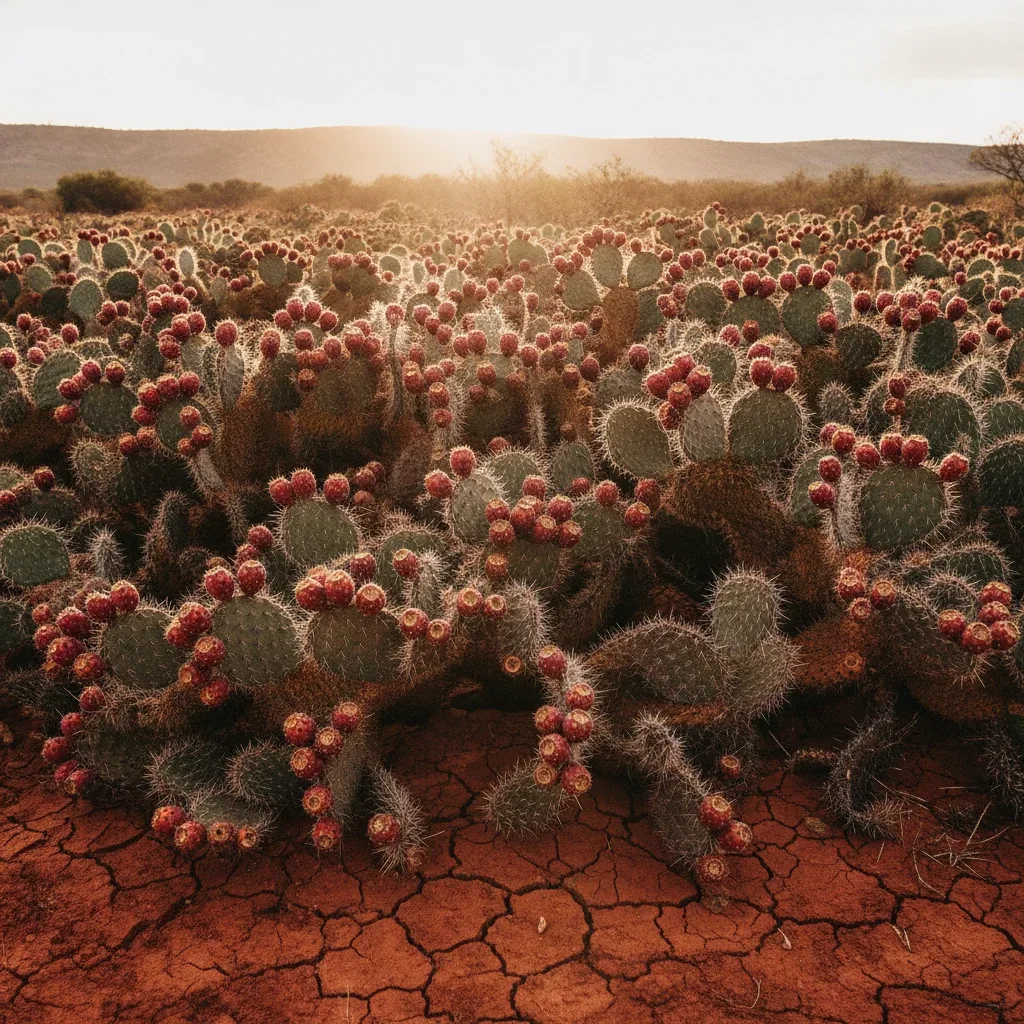
A precious plant in one place can become a plague in another. The story of the prickly pear in Australia is the most famous example.
An invasion in Queensland
In the 1920s prickly pear covered tens of millions of acres in Australia, mostly in Queensland, spreading by about a million acres a year. Areas vary by source.
A committee to act
In 1920 the federal government, Queensland and New South Wales set up the Commonwealth Prickly-Pear Board to look for a natural enemy of the plant.
A moth from Argentina
Cactoblastis cactorum arrived in 1925. Its caterpillars feed on the pads. Billions of eggs were distributed between 1927 and 1931.
1932: almost 7 million hectares
By 1932 most dense stands had collapsed and almost 7 million hectares were returned to settlers. A monument in Dalby recalls this story.
What this story teaches
A plant moved away from its natural enemies can behave very differently. In regions where prickly pear has long been cultivated, such as Morocco, it is part of the landscape and of the rural economy.
Discover Atlas Pure oil
Atlas Pure: prickly pear seed oil from Morocco, produced by GIE Targanine, a group of women's cooperatives.
Discover our productsSources: Wikipedia (“Prickly pears in Australia”), Raghu and Walton, BioScience, 2007. Areas and dates vary by source.